The Two Pitch Hip Roof Geometries (Ridge and Height) calculator computes the metrics associated with a hip roof with two angles (side and face) based on the ridge length, overall roof length, roof span and roof height.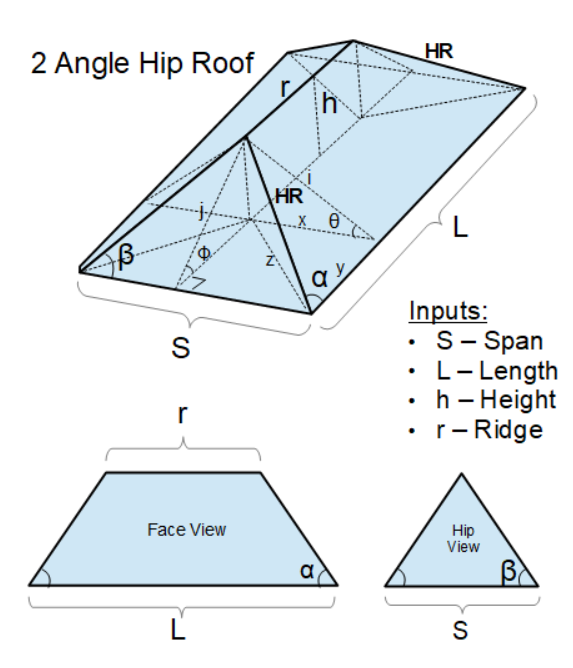
INSTRUCTIONS: Choose units and enter the following:
- (r) Ridge Length
- (L) Length of Roof
- (S) Span of Roof
- (h) Roof Height (between ridge and bottom)
Hip Roof Geometries(HRG): The calculator returns:
- (V) attic volume under roof in cubic feet.
- (TSA) Surface area in square feet (includes all four sloped faces).
- (SFA) Surface area of Span Face (one side) in square feet.
- (LFA) Surface area of Length Face (one side) in square feet.
- (SxL) Base area in square feet.
- (α) Angle of Face corners
- (θ) Main Pitch
- (β) Angle of Side Corners
- (Φ) Pitch of Sides
- (HR) Hip Ridge Length in feet
- (i) Common Joist Length in feet
- (j) Max Side Joist in feet
- (z) Corner Diagonal in feet
Note: answers can be automatically converted to compatible units via the pull-down menu.
The Math / Science
A pure hip roof has the same pitch on all four sides. However, this function is when the sides have a different pitch from the main faces. There is a term for a hip roof where the slope (pitch) of the hip ends differs from the main roof faces—it's commonly referred to as an "asymmetrical hip roof" or sometimes a "jerkinhead variant" if the shape is modified in other ways as well. More precisely, when the slopes differ but it retains the full hip structure, it may also be described as a:
- "unequal pitch hip roof"
- "non-uniform hip roof"
- or in architectural terms, simply a "hip roof with unequal pitches"
Hip Roof Calculator
The Hip Roof calculators compute the area, ridge lengths and materials required for a basic hip roof.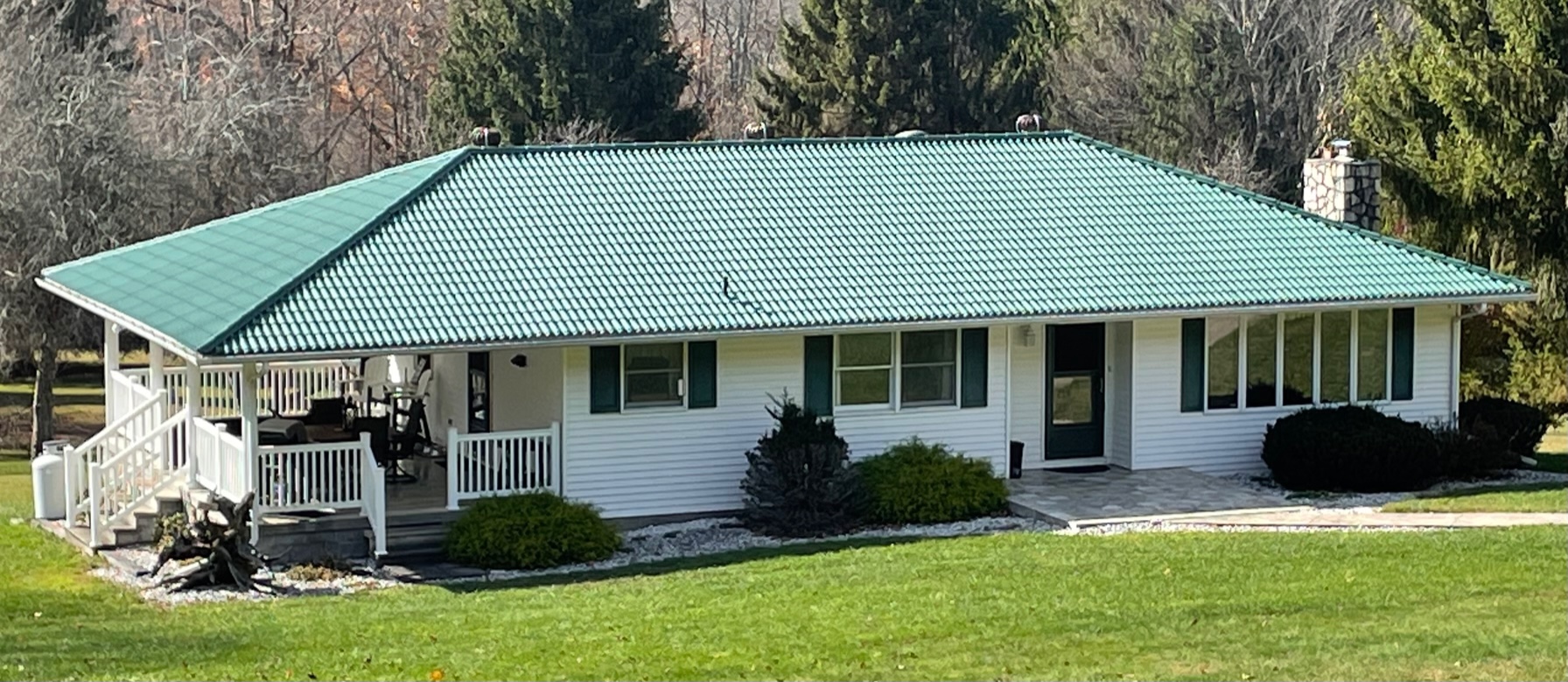
- Surface Area of Hip Roof: This computes the surface area of the four faces of a hip roof based on the dimensions. The calculator also includes the number of 4x8s, bundles of shingles, bundles of ridge shingles and the number of roofing nails needed.
- Sheathing for Hip Roof: This computes the number of 4x8s need to cover the surface area of a hip roof based on the dimensions.
- Shingles for Hip Roof: This computes the number of standard and ridge shingles and roofing nails for a hip roof based on the dimensions.
- Shingles for Two Pitch Hip Roof: Computes the number of shingles (normal and ridge) needed for a roof with a hip roof with two angles (side and face) based on the overall roof length, roof span, pitch of the main face and pitch of the hips and the coverage associated with a bundle of shingles and a bundle of ridge shingles.
- Cost of Shingles for Hip Roof: This computes the number of standard shingles for a hip roof based on the dimensions of the roof and size of the shingles and the unit price of a bundle of shingles to estimate cost of shingles for a hip roof.
- Roofing Nails for Hip Roof: This computes the number of roofing nails to shingle a hip roof based on the dimensions under normal and high wind conditions.
- Metal for Hip Roof: This computes the metal roof materials, panels and trim, for a hip roof based on the dimensions of the roof and width of the panels. Trim includes ridge cap, angle trim, and snow guard. It also includes the number of metal panel screws needed.
- Screws for Metal Hip Roof: This computes the number of metal panel screws needed for a hip roof based on the dimensions.
- Purlins for Hip Roof: This computes the total number and length of purlins (roof support boards) for a hip roof based on the ridge length of the roof, the roof pitch and the span of the roof.
- Underlayment for Hip Roof: This computes the surface area of a hip roof based on the dimensions and then uses the surface area to compute the cost of underlayment based on the unit price (price per square feet) of underlayment material.
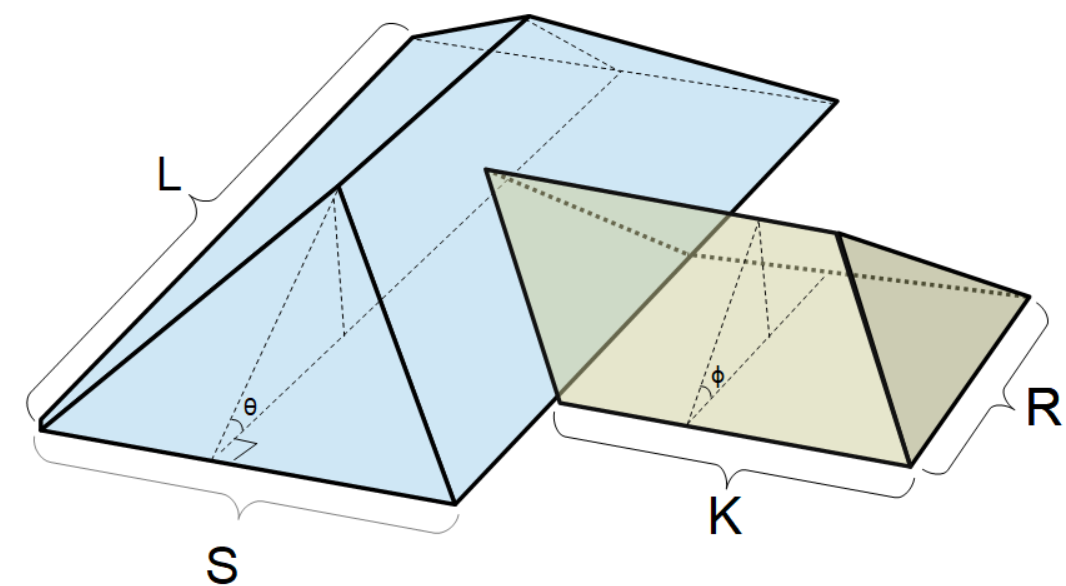
- Surface area for Double Hip Roof: This computes the surface area of a hip roof with a hip roof dormer based on the dimensions and provides the number of 4x8 sheets, bundles of shingles, bundles of ridge shingles, length of flashing, and number of roofing nails for normal and high wind conditions.
- Hip Roof Geometries from Length, Span and Height: Computes hip roof metrics based on the roof length, span and height.
- Hip Roof Geometries from Length, Span and Pitch: Computes hip roof metrics based on the roof length, span and pitch.
- Two Angle Hip Roof Geometries: This computes the lengths and surface areas associated with a hip roof where the pitch of the sides are not the same as the pitch of the faces.
- Two Pitch Hip Roof Geometries (Ridge and Height): Computes the metrics associated with a hip roof with two angles (side and face) based on the ridge length, overall roof length, roof span and roof height.
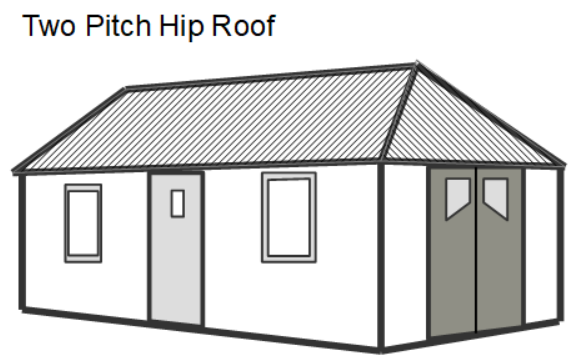
- Two Pitch Hip Roof Geometries: Computes the metrics associated with a hip roof with two angles (side and face) based on the overall roof length, roof span, pitch of the main face and pitch of the hips.
- Shingles for Two Pitch Hip Roof: Computes the number of shingles needed for a two pitched hip roof based on the roof's length and span, the main and hip pitches, and the coverage per square of shingles.
- Metal for Two Pitch Hip Roof: Computes the number and length of panels for a two pitched hip roof based on the length, span, pitch of the face, pitch of the hips and the width of the metal panels. It also returns the length of ridge cap needed for the main ridge and the four hips, and the total number of screws for the metal panel.
A hip roof is a type of roof design where all sides slope downwards to the walls, usually with a fairly gentle slope. Each side of the roof typically has two slopes that meet at the top to form a ridge. The outer edges of the roof are angled upwards, creating a pyramid-like shape or trapezoidal shape.
Hip roofs are known for their stability and resistance to strong winds, making them popular in areas prone to hurricanes or high winds. They also provide good drainage, as rainwater easily runs off all sides of the roof.
Hip roofs are commonly found on a variety of structures including residential homes, barns, and some commercial buildings. They can be more complex to construct than simpler roof designs like gable roofs, but they offer advantages in terms of durability and aesthetics.