The Busbar Cross-section Area calculator computes the cross-section area required to carry an amount of current a busbar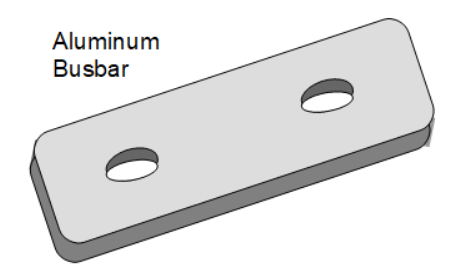 based on the current density of the busbar material.
INSTRUCTIONS: Choose units and enter the following:
- (I) Busbar Carrying Current
- (k) Current Density of Busbar Material. (dafault: 0.9 A/mm2 for Aluminum)
Busbar Cross-section Area (A): The cross-section area is returned in milimeters squared (mm2). However, these can be automatically converted to compatible units via the pull-down menu.
The Math / Science
The Busbar Current equation computes the amount of current that can be carried in a busbar. A busbar is a metallic strip or bar used to conduct and distribute electricity within electrical equipment. It acts as a common junction point where multiple circuits or devices can connect to a power source. Busbars are usually copper or aluminum because of their high conductivity. Their shape is flat, rectangular, or sometimes tubular.
Busbars distribute electrical power to multiple outgoing circuits and they minimize energy loss and heat by providing a low-resistance path. This helps organize and simplify wiring in switchgear, panels, and substations.
Busbars are primarily used in electrical panels in buildings, switchgear and substations, battery packs, like in electric vehicles or UPS systems.
Think of it as a “power highway” inside electrical systems, carrying large currents safely and efficiently while connecting various devices.
Busbar Materials
The two most common materials for busbars (the rigid conductors that distribute electricity inside switchgear, panels, and substations) are:
Copper (Cu)
- Most common overall, especially in medium- and low-voltage systems.
- High electrical conductivity (second only to silver).
- Good mechanical strength and corrosion resistance.
- Often used bare, tinned, or silver-plated to improve surface conductivity.
Aluminum (Al)
- Also widely used, especially in high-voltage transmission and cost-sensitive applications.
- Lower conductivity than copper (~61% of copper’s), so busbars must be larger in cross-section for the same current capacity.
- Much lighter and cheaper than copper.
Copper is preferred for compact equipment, critical reliability, and high conductivity needs. Aluminum is preferred where cost and weight matter more than compact size (like in substations or large installations).