Reynold's number is the measure of the tendency for turbulence to occur occasioned by either high velocity of blood flow, pulsatile nature of the flow, sudden change in the vessel's diameter, or a large vessel diameter.
where
`N_(RE)`= Reynold's Number
v= Fluid velocity
D=Tube diameter
`rho`=Density
`eta`=Viscosity
Notes
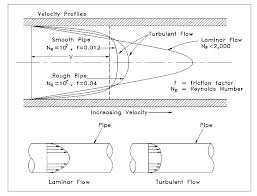
The Reynolds number is defined as the ratio of inertial forces to viscous forces and consequently quantifies the relative importance of these two types of forces for given flow conditions. Reynolds numbers frequently arise when performing scaling of fluid dynamics problems, and as such can be used to determine dynamic similitude between two different cases of fluid flow. They are also used to characterize different flow regimes within a similar fluid, such as laminar or turbulent flow: laminar flow occurs at low Reynolds numbers, where viscous forces are dominant, and is characterized by smooth, constant fluid motion; turbulent flow occurs at high Reynolds numbers and is dominated by inertial forces, which tend to produce chaotic eddies, vortices and other flow instabilities.